

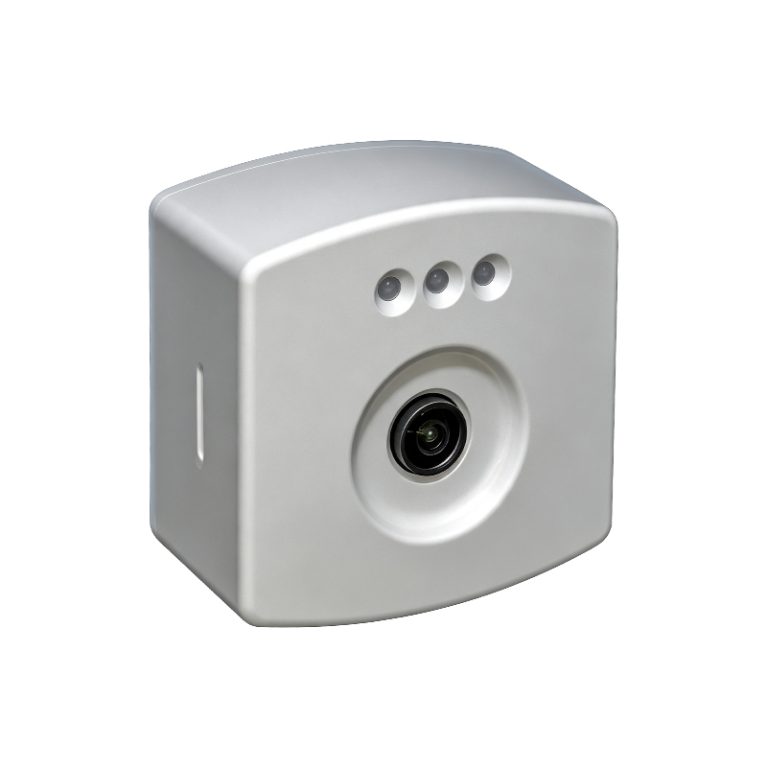
Tag - Smartgiant Horus AI camera

NEWS

Smartgiant Horus AI camera

Recommand Products
QUICK CONTACT

NeoCAM AI Camera Driving Smarter Parking Management

As urbanization continues to accelerate, parking facilities are no longer just simple “concrete boxes.” They have become the capillaries of urban transportation systems and a key indicator of how efficiently a smart city operates.Whether it’s the tidal flow of vehicles at commercial complexes or the nighttime parking shortages in older residential communities, parking operators are facing increasingly complex challenges:• How can license plate recognition accuracy be maintained in complicated environments? • How can ordinary surveillance cameras be equipped with the ability...


Three-Channel 71/2DC Voltmeter – A High-Cost-Effectiveness Solution for Cell Testing and Sorting

What are the purposes of OCV1, OCV2, OCV3, and OCV4 in lithium battery production?‌ In the lithium battery production process, voltage parameter detection at each stage concerns product qualification rate and safety performance. The following will analyze the application of OCV in each link of the production process. ‌OCV1 (Initial Open-Circuit Voltage Measurement):‌ The first open-circuit voltage measurement after the electrode assembly is formed into a cell, before electrolyte injection. It is necessary to verify whether the electrode state causes self-discharge. A...


RV1126B AI Camera Edge-Cloud Collaboration Solution

During the implementation of AI vision projects, the question "Should algorithms run on camera devices or servers?" remains a critical challenge for developers. Traditional approaches present a binary dilemma: edge devices offer low latency but limited computing power, while cloud-based solutions provide robust processing capabilities but rely on network infrastructure and incur high costs. Rockchip's RV1126B AI camera delivers an optimized solution through edge-cloud collaboration, enabling computation to occur at the most suitable location. This innovative approach has become a...


engineering-grade AI

AI Data Acquisition for the Physical World

From Distributed Modular Data Collection to Engineering-Grade Intelligent Systems 1. The Evolution of AI: From Model-Driven to Data-Driven Systems From an industrial perspective, the development of artificial intelligence has broadly progressed through several stages: rule-based systems, machine learning, deep learning, and, most recently, large foundation models. In the earlier phases, the primary drivers of AI advancement were algorithmic innovation and increased computational power. Rapid improvements in model capability enabled large-scale deployment of perception, recognition, and generative applications.As model architectures gradually converge and...


What can we do for you?