
From Distributed Modular Data Collection to Engineering-Grade Intelligent Systems
1. The Evolution of AI: From Model-Driven to Data-Driven Systems
From an industrial perspective, the development of artificial intelligence has broadly progressed through several stages: rule-based systems, machine learning, deep learning, and, most recently, large foundation models. In the earlier phases, the primary drivers of AI advancement were algorithmic innovation and increased computational power. Rapid improvements in model capability enabled large-scale deployment of perception, recognition, and generative applications.
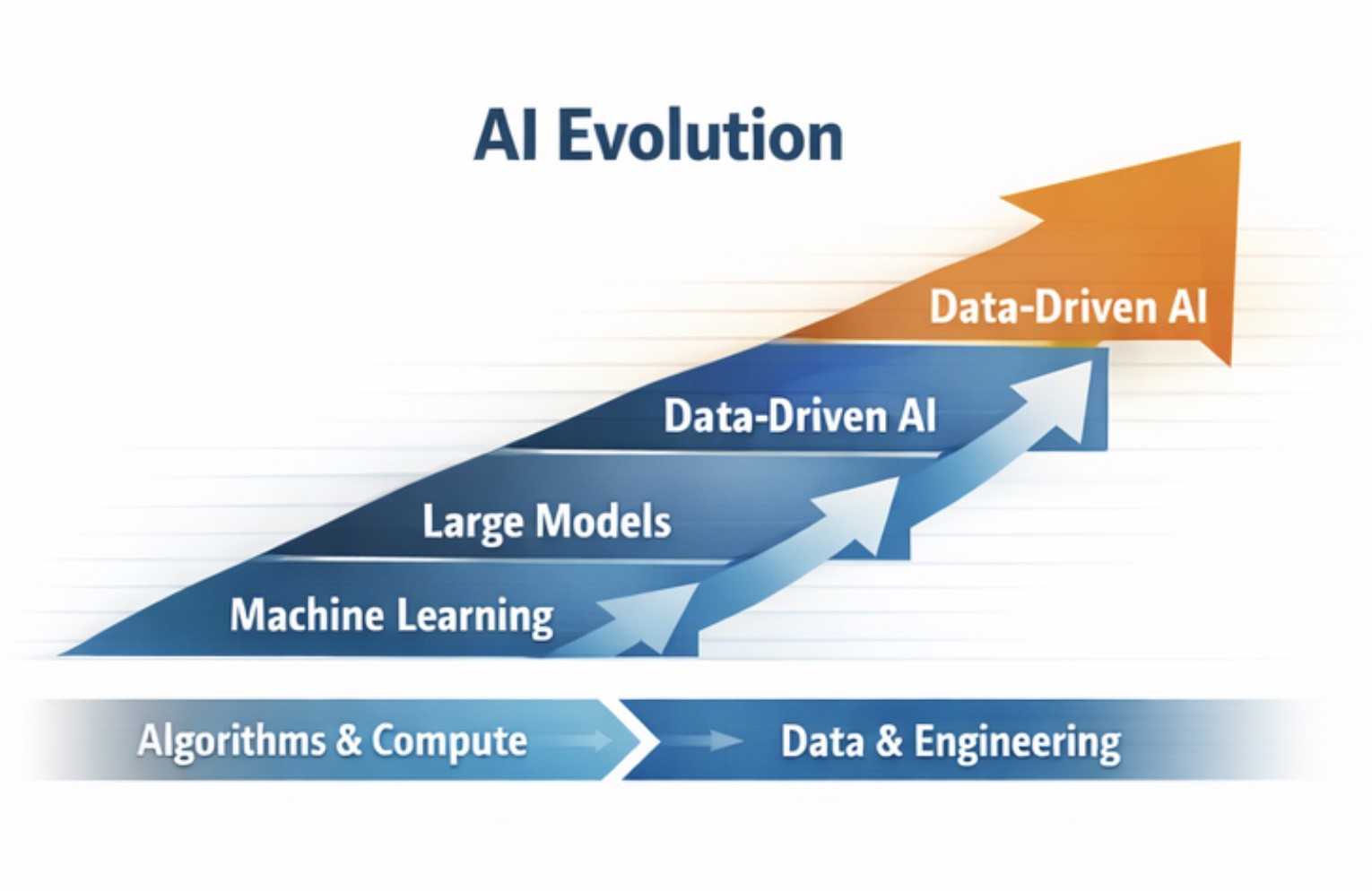
As model architectures gradually converge and the marginal returns of raw compute investment diminish, AI is entering a new stage of development. The industry’s focus is shifting from models and compute toward data acquisition, data quality, and engineering capability. This shift is particularly evident in real-world domains such as industry, energy, and scientific research, where AI systems must interact with continuously changing, noise-rich physical processes rather than standardized digital content.
In these environments, the key challenge for AI is no longer the algorithm alone, but the ability to continuously and reliably acquire high-quality data from the physical world and transform it into usable inputs for training and inference. As a result, AI data acquisition is evolving from a supporting function into core infrastructure—becoming a critical bridge between the physical world and intelligent systems.
2.A Panoramic View of AI Data Acquisition: Multi-Source Data and Key Categories
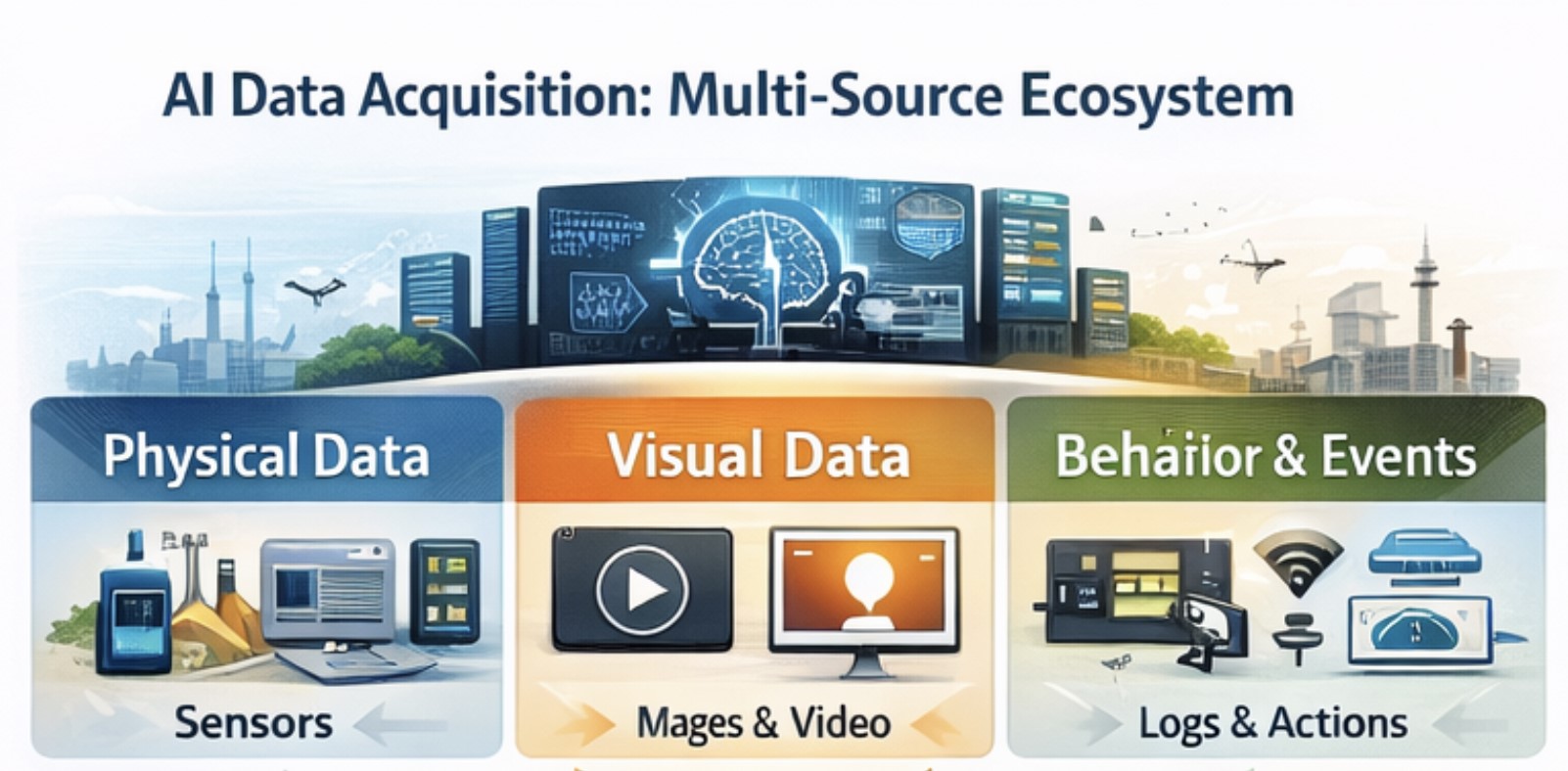
From a system-level perspective, data acquisition in AI is not a single process, but a multi-source ecosystem composed of diverse data types. Each type originates from a different system layer and involves distinct acquisition methods, engineering complexity, and application value. Together, they support AI model training, inference, and system operation.
Broadly speaking, AI data acquisition encompasses multiple data modalities. Among them, physical data and visual data are the most direct connections to the real world and form the core inputs for AI perception and understanding. At the same time, AI systems continuously generate and rely on behavioral and event data, as well as digital system and communication data. During model training and validation, simulated and synthetic data also play an important complementary role. Across different stages and system layers, these data types work together to determine the reliability and engineering viability of AI systems.
Physical data acquisition directly originates from the real physical world. Through sensors and electronic systems, it captures continuously varying physical quantities. Based on signal characteristics and engineering properties, this category includes:
- Electrical and electronic signals, such as voltage, current, high-speed digital signals, and RF signals
- Mechanical signals, including pressure, stress, acceleration, velocity, and vibration
- Thermal and environmental signals, such as temperature, humidity, atmospheric pressure, wind direction, wind speed, and cloud height
- Fluid and process signals, including flow and related process parameters
- Optical and photonic signals, such as light intensity and spectral information
These signals differ significantly in amplitude, frequency, dynamic range, and noise characteristics. They are typically continuous in nature and highly environment-dependent, making them the most fundamental—and most engineering-intensive—data sources for industrial and scientific AI applications.
In contrast, visual data acquisition primarily consists of images and video captured by imaging systems, describing environments, objects, and behavioral states. With advances in imaging technology, visual data has expanded to include multispectral, infrared, and depth modalities, playing an increasingly important role in perception, recognition, localization, and decision-making tasks.
In addition, AI systems continuously collect behavioral and event data during operation, such as equipment state changes, operation records, and system logs. These data are usually discrete and highly dependent on temporal sequences and contextual relationships. Digital system and communication data from various interfaces, buses, and protocols are also critical in industrial automation and complex systems. Meanwhile, simulation and synthetic data are often used in early training stages, extreme scenario coverage, and algorithm validation, complementing real-world data.
Taken together, AI data acquisition is a multi-type, multi-layer engineering system. Physical data and visual data form the core foundation connecting AI to the real world, while other data types provide essential support for system operation, analysis, and optimization. Within this data panorama, the ability to acquire and engineer high-quality real-world signals is becoming a decisive factor for the stable deployment of AI systems.
3.Physical Data Acquisition for AI: Engineering Challenges and System Architecture
In real engineering environments, the difficulty of physical data acquisition does not lie in whether signals can be captured, but in whether high-quality data can be acquired reliably over long periods and effectively adapted to AI system requirements. Continuous operation, complex operating conditions, and system-scale expansion make data acquisition a classic systems-engineering challenge.
First, signal accuracy and reliability form the foundation of physical data acquisition. Weak signals, high-precision measurements, and operation in complex environments depend on well-designed front-end acquisition circuitry, including signal conditioning, noise control, and long-term stability. Without these, data quality will directly limit the performance of AI systems.
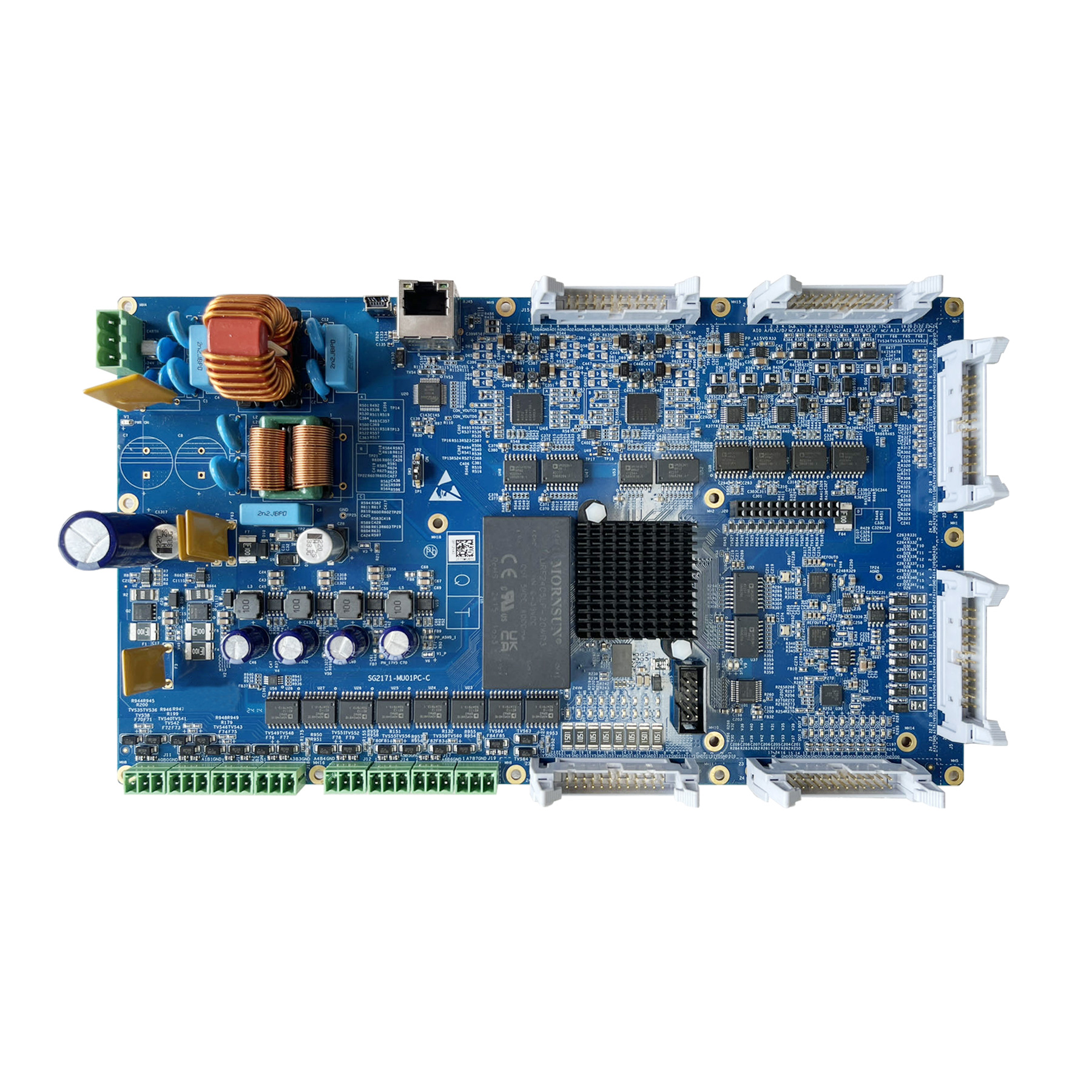
Second, simultaneous acquisition of multiple channels and multiple physical quantities has become the norm. This requires a clear system architecture and strong parallel processing capability to maintain data consistency and integrity across channels. To address this, systems often adopt FPGA-based parallel processing architectures, enabling channel scheduling, preprocessing, and data formatting to be performed as data is generated, ensuring a stable data stream for downstream processing.
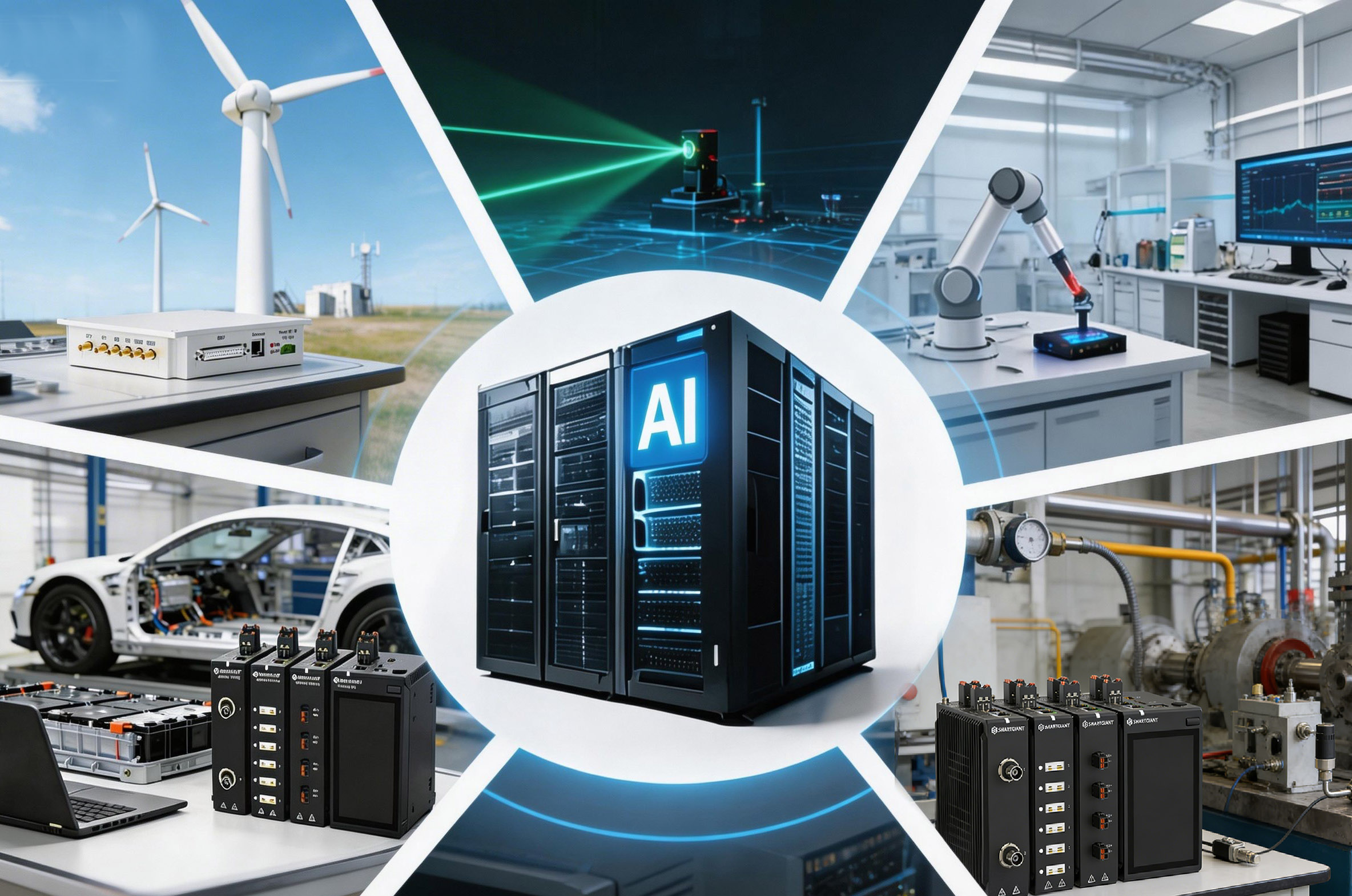
In applications involving high-speed digital and RF signal acquisition, systems must provide not only high-precision, high-speed analog-to-digital conversion, but also sustained high-throughput data processing to ensure stable long-term output.
Before data enters the AI system, some applications require preliminary processing at the edge. By integrating SoC modules with dedicated NPUs, acquisition systems can run AI algorithms locally for preprocessing, feature extraction, and acceleration, transmitting only high-value data or results upstream. This approach balances real-time performance, bandwidth consumption, and system load.
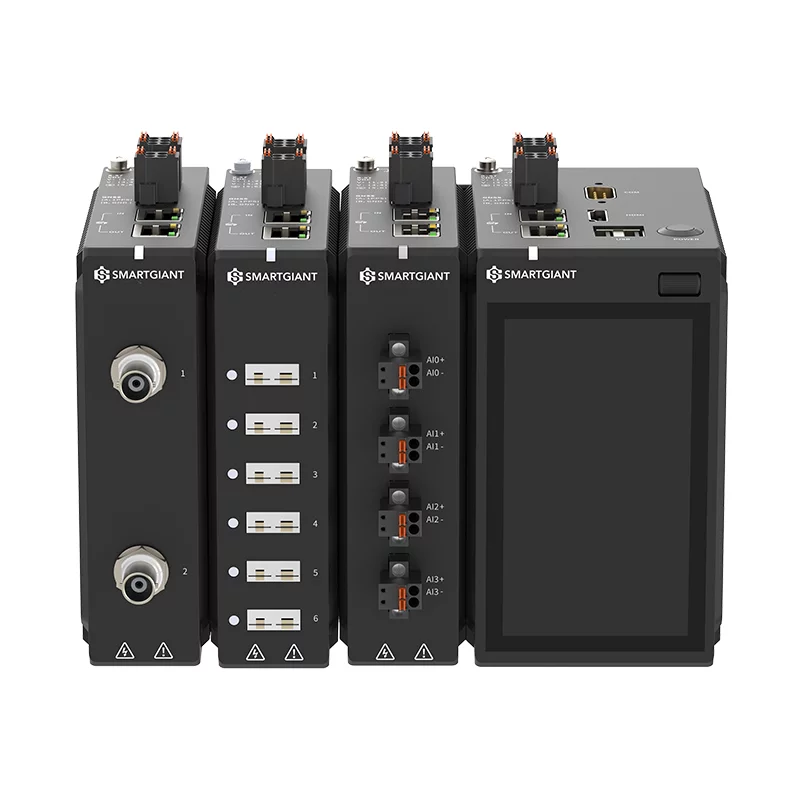
Because different signals vary widely in amplitude, frequency, and dynamic characteristics, physical data acquisition typically requires different types of acquisition modules to cover needs ranging from high-precision analog measurement to high-speed and RF signal capture.
In industrial and scientific field deployments, measurement points are often distributed and operate over long periods. As a result, modular, distributed architectures with synchronized acquisition capabilities have become essential. Such architectures not only support system scalability but also ensure temporal consistency across multi-source data.
Overall, physical data acquisition for AI is a comprehensive engineering discipline encompassing front-end design, parallel processing, edge computing, and system deployment. The soundness of its architecture directly determines the reliability and sustainability of AI systems in real-world environments.
4.Conclusion: Building Toward a More Complete AI Perception Infrastructure
As AI shifts from algorithm-centric development toward engineering-grade deployment, data is becoming the key factor that defines the upper limit of system capability. Starting from the evolution of AI itself, this article has outlined the major categories of AI data acquisition and focused on physical data acquisition for real-world applications. It is clear that physical data acquisition is not a simple input stage, but a comprehensive engineering system involving signal front ends, system architecture, parallel processing, and deployment strategies. Its stability and scalability directly affect the long-term operation of AI systems in industrial and scientific contexts.
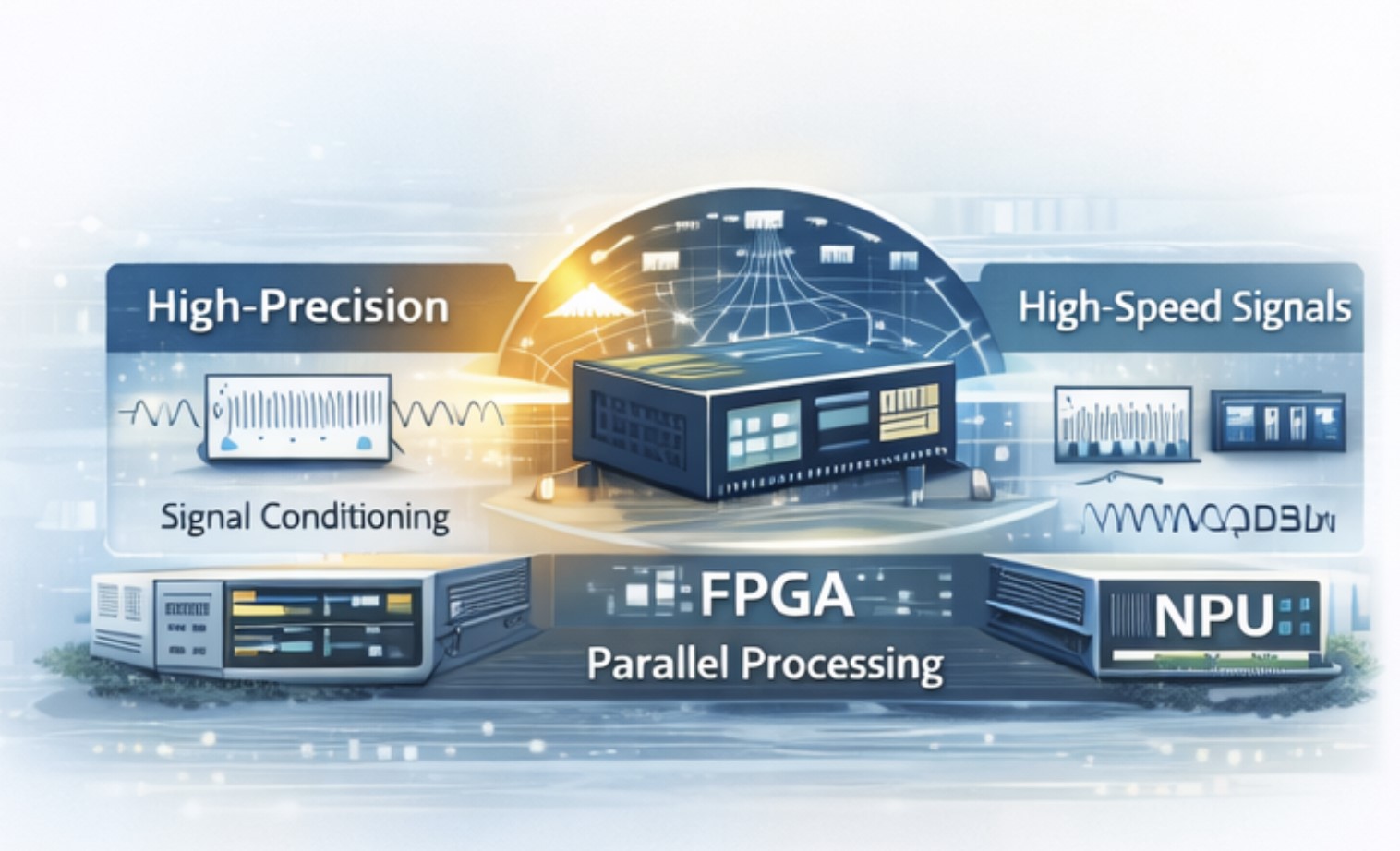
In practical applications, the coexistence of weak and high-speed signals, multi-physics acquisition, and long-term continuous operation makes modular, distributed, and synchronized acquisition systems an inevitable choice. By incorporating FPGA-based parallel processing architectures and SoC modules with dedicated NPUs, data can be acquired with high quality while also being preprocessed and accelerated at the edge, achieving an optimal balance between real-time performance, bandwidth, and system load. This capability is increasingly evolving into indispensable data infrastructure for AI systems.
However, perception of the real world goes beyond physical quantities alone. In addition to precise measurement of states and processes, AI must also achieve intuitive understanding of environments, objects, and behaviors. In this dimension, visual data acquisition forms another critical entry point for AI perception, complementing physical data. How to acquire high-quality visual data in complex environments and integrate it with physical data will be a key challenge in the next stage of AI system evolution.
In subsequent discussions, we will further explore the technical paths and engineering practices of AI visual data acquisition, continuing from the data source to understand how AI systems can more comprehensively connect with the real world.
You Might Also Like:
1.High-Speed Data Acquisition Module – Smartgiant
2.Data Acquisition Box – Smartgiant
3.UltraScale+ Series – Smartgiant
4.Zynq7000 Series – Smartgiant
For more information please contact : info@smartgiant.com